Reducing Payment Friction: The Role of Intelligent Collections Chatbots
In the world of B2B and B2C finance, there is a dangerous myth: “The client isn’t paying because they don’t want to.” The reality, according to recent User Experience (UX) studies, is that a significant percentage of delays are not due to a lack of funds, but due to friction in the process. Payment portals that don’t load, forgotten passwords, uncomfortable phone calls, or aggressive emails that end up in spam.
This is where technology plays a conciliatory role. Collections chatbots have emerged not as tools for harassment, but as service facilitators. For modern Credit and Collections Managers, understanding that collections is an extension of customer service is vital.
Below, we explore how a well-trained virtual assistant can be more effective (and empathetic) than a traditional process, transforming accounts receivable automation into a competitive advantage.
1. The End of Aggressive Collections: Artificial Empathy
One of the biggest pain points in the collections department is the emotional burnout of the team. A human agent, after 50 rejection calls, loses patience. Their tone changes, becomes curt, and this puts the debtor on the defensive.
Collections chatbots have a “superhuman” advantage: they don’t get tired, and they don’t get offended. They can maintain a helpful, neutral, and professional tone 100% of the time, regardless of the hour or the client’s response.
This consistency is fundamental to maintaining long-term commercial relationships, ensuring that today’s collection doesn’t mean losing tomorrow’s client.
2. Removing Barriers: A Frictionless Payment Experience
How many steps does your client have to take to pay you? If the answer is more than three, you have a friction problem.
The payment experience should be as smooth as buying on Amazon. Traditional methods force the client to log in to complex portals or call during office hours.
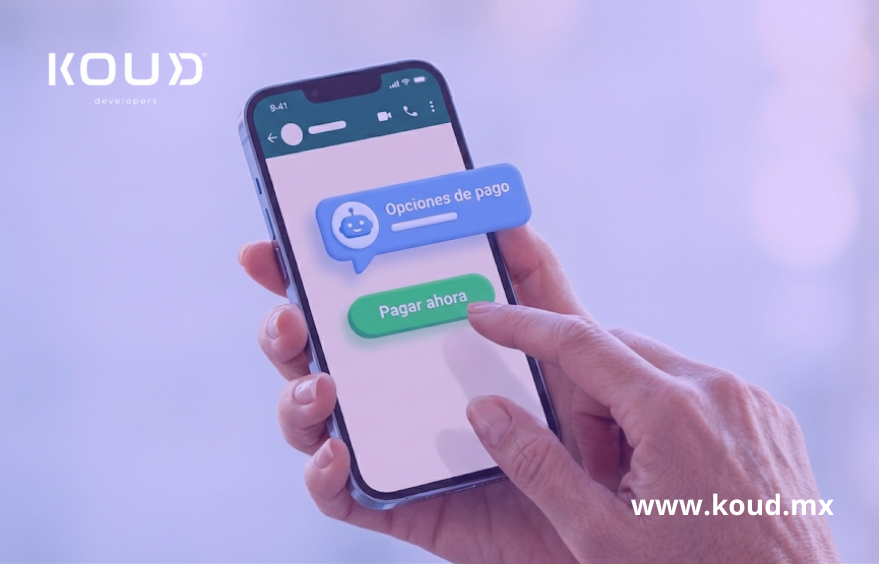
Implementing collections chatbots allows you to send a direct message (via WhatsApp or SMS) that includes:
- The exact amount and invoice details.
- A “Pay Now” button or a direct payment link.
- Options to schedule a payment promise if they lack liquidity at that moment.
By putting the solution in the palm of their hand, you eliminate technical excuses (“I couldn’t access the portal,” “I didn’t have the banking details handy”).
3. 24/7 Availability for the Busy Client
The modern B2B debtor is often a business owner or a busy finance manager. They often remember they need to pay an invoice at 9:00 PM or on a Sunday morning—times when your collections team is not available.
Accounts receivable automation via chatbots allows you to capture those payments at the exact moment the client intends to pay. Collections chatbots are always active, ready to resolve doubts like “Can you resend the XML invoice?” or “What is my balance as of today?”, closing the collection cycle without human intervention.
4. Data-Driven Personalization
Not all debtors are the same. An intelligent chatbot, integrated with your ERP or CRM (as we showed in the Koud webinar), knows who is on the other side.
The system won’t treat a VIP client with a one-day oversight the same way it treats a high-risk client. Collections chatbots can adapt the script: offering help to the former and requesting a firm commitment from the latter. This ability to segment communication drastically improves recovery rates.
5. Scalability Without Increasing Headcount
Finally, the financial argument. To cover a portfolio of 1,000 clients in a personalized way, you would need a huge team of agents. With collections chatbots, you can manage thousands of simultaneous conversations with the same quality standard.
This allows your human team to focus on truly complex cases (commercial disputes, bankruptcies, legal negotiations), letting accounts receivable automation handle the transactional and preventive volume.
Frequently Asked Questions
Do clients prefer speaking to a real person?
For complex issues (like a dispute over an undelivered service), yes. But for transactional tasks like “knowing how much I owe” or “getting the payment link,” UX studies show that users prefer the immediacy of a chatbot over waiting on hold for a human.
What happens if the chatbot doesn’t understand the client?
Modern collections chatbots are designed with “handover protocols.” If the bot detects frustration or a question outside its knowledge base, it transfers the conversation to a human agent at Koud.mx, who already has the full context to resolve the issue.
Is it safe to pay via a chatbot?
Absolutely. The chatbot does not process the money in the text chat; it sends encrypted links to secure, certified payment gateways. The payment experience is secure and complies with banking regulations.
Conclusion
Effective collections is no longer about who shouts the loudest, but who makes the payment process easiest. Technology allows us to transform a pain point into a service interaction.
Implementing collections chatbots reduces friction, protects client relationships, and, most importantly, accelerates cash flow. If your current process relies 100% on manual human effort, you are losing collection opportunities every minute your office is closed.